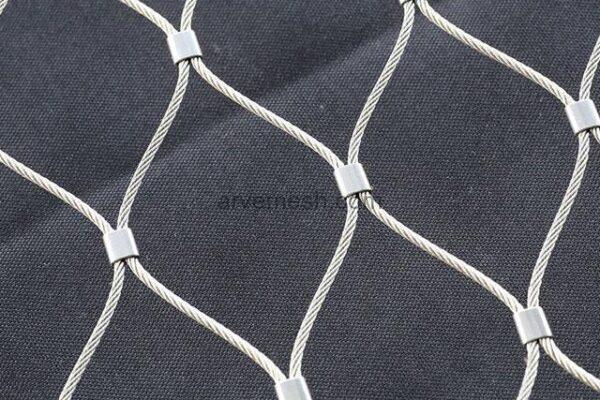
Stainless Steel Chain Link Fence for Industrial and Outdoor Applications
ArveMesh offers stainless steel chain link fence solutions for industrial, commercial, architectural, and outdoor perimeter applications. Manufactured from stainless steel wire woven into a diamond-shaped mesh, this fencing provides an open barrier with good visibility, airflow, and corrosion resistance appropriate to the selected stainless steel grade and service environment.
Stainless steel chain link fencing is suitable for projects where material durability, low maintenance requirements, and long-term performance are important considerations. Typical applications include industrial facilities, coastal properties, equipment enclosures, commercial boundaries, and selected marine or infrastructure environments.
Available specifications can be tailored to project requirements, including stainless steel grade, wire diameter, mesh opening, fence height, roll length, and edge finish, subject to manufacturing availability.
Contact ArveMesh to discuss your stainless steel chain link fence requirements and request a quotation.
What Is Stainless Steel Chain Link Fence?
Stainless steel chain link fence is a woven wire fencing product manufactured from stainless steel wire. The wires interlock to form a diamond-shaped mesh that provides a practical boundary while allowing light and air to pass through.
Unlike ordinary carbon steel wire protected primarily by a zinc coating, stainless steel relies on a chromium-rich passive surface layer for corrosion resistance. The actual performance depends on the stainless steel grade, surface condition, fabrication, installation, and environmental exposure.
Stainless steel chain link mesh can be supplied in different wire diameters, mesh openings, heights, and roll lengths. It can be used as a standalone mesh product or incorporated into a larger fencing system with compatible posts, rails, fasteners, and gates.
For projects exposed to salt spray, chemicals, or frequent cleaning, specify the environment clearly so the appropriate material grade can be evaluated.
Types of Stainless Steel Chain Link Fence
1. 304 Stainless Steel Chain Link Fence
Grade 304 stainless steel is a common choice for general industrial and architectural applications where good corrosion resistance and a clean metallic finish are required.
Potential applications include commercial facilities, indoor equipment enclosures, general outdoor boundaries, and locations without severe chloride exposure.
Grade 304 may not be the best choice for every coastal or salt-exposed application. Evaluate the exposure conditions before selecting a grade.
2. 316 Stainless Steel Chain Link Fence
Grade 316 stainless steel contains molybdenum, which improves resistance to chloride-related pitting compared with grade 304 in many environments.
It may be considered for coastal facilities, marine-adjacent properties, chemical processing areas, and other locations where corrosion resistance is a priority.
However, grade 316 is not corrosion-proof. Conditions involving concentrated chlorides, stagnant deposits, aggressive chemicals, or elevated temperatures may require additional assessment.
3. Custom Stainless Steel Chain Link Mesh
Custom stainless steel chain link mesh is suitable for projects that require non-standard dimensions or specific material properties.
Customization may include mesh opening, wire diameter, fence height, roll length, stainless steel grade, and edge finish. Drawings and technical specifications help establish whether the requested configuration is feasible.
4. Stainless Steel Chain Link Fence Rolls
Roll-format mesh is commonly used for long boundaries and projects where the fencing is cut and tensioned during installation.
The required roll width, length, mesh opening, and wire diameter should be confirmed before ordering. Installation may require compatible tensioning hardware and appropriately designed support posts.
5. Stainless Steel Chain Link Fence Panels
Some projects require mesh supplied as fabricated sections or incorporated into a framed fencing system.
Panel dimensions, frame materials, connection methods, and fastener grades should be specified together to avoid corrosion problems caused by incompatible materials or unsuitable connections.
If your project requires rigid welded rectangular mesh rather than woven diamond mesh, consider our Welded Wire Mesh or Welded Wire Fence products, depending on the application.
Stainless Steel Chain Link Fence Specifications
The following table provides indicative specification categories for project planning. Actual available sizes and tolerances must be confirmed with the supplier.
| Specification | Options |
|---|---|
| Material grade | Stainless steel 304 or 316, subject to availability |
| Mesh opening | Common project options may include 25 mm, 40 mm, 50 mm, and 60 mm |
| Wire diameter | Project-dependent; often specified within approximately 1.5–4.0 mm |
| Fence height | Common planning options include 1.0 m, 1.2 m, 1.5 m, 1.8 m, and 2.0 m |
| Roll length | Custom or project-specific |
| Surface finish | Mill finish or other available wire finish |
| Mesh structure | Diamond-shaped woven mesh |
| Edge finish | Knuckle-knuckle, twist-twist, or knuckle-twist, where available |
| Accessories | Compatible posts, rails, fasteners, tension bars, and gates |
| Customization | Grade, mesh opening, wire diameter, height, length, and system configuration |
These dimensions are indicative examples, not a guaranteed stock list. Confirm the available grades, dimensions, tolerances, and relevant material documentation before placing an order.
Key Benefits of Stainless Steel Chain Link Fence
Corrosion Resistance
Stainless steel forms a passive surface layer that helps resist corrosion. The level of protection depends on the selected grade and the operating environment.
Grade selection is particularly important for coastal, marine, chemical, and industrial installations. Proper cleaning, drainage, and removal of corrosive deposits can also affect service life.
Long-Term Durability
Stainless steel chain link mesh is suitable for applications where the fencing is expected to remain in service for extended periods. Its actual service life depends on the grade, mesh construction, installation quality, exposure, and maintenance.
Low Maintenance Requirements
In suitable environments, stainless steel can reduce the need for routine coating renewal compared with some coated carbon steel alternatives. Regular inspections are still recommended, especially where salt deposits, industrial contaminants, or mechanical damage may occur.
Open Mesh and Visibility
The diamond-shaped woven structure provides an open barrier with airflow and visibility. It can be used around equipment, commercial properties, selected infrastructure facilities, and other areas where a solid wall is unnecessary.
Clean Metallic Appearance
The natural metallic finish suits industrial, commercial, and architectural applications. Stainless steel mesh can complement other metal structures when the grade, finish, and connections are selected appropriately.
Flexible Project Specifications
Stainless steel chain link fencing can be specified by grade, wire diameter, mesh opening, height, and roll dimensions. This flexibility makes it suitable for a range of enclosure and perimeter requirements.
Applications of Stainless Steel Chain Link Fence
Industrial Facilities
Factories, workshops, and industrial plants may use stainless steel chain link mesh for equipment enclosures, selected perimeter areas, and locations where corrosion resistance is an important design consideration.
Coastal and Marine-Adjacent Properties
Stainless steel fencing can be considered for properties exposed to humid, salt-laden air. Grade 316 may offer improved resistance to chloride-related pitting compared with grade 304, but the actual suitability depends on exposure severity and maintenance conditions.
Commercial Buildings
Commercial facilities may use stainless steel chain link fencing for service areas, equipment zones, storage enclosures, and selected outdoor boundaries where a durable metallic finish is preferred.
Infrastructure and Utility Sites
Utility facilities, transport infrastructure, and service installations may use stainless steel mesh in selected areas where the material properties meet the project’s technical requirements.
Equipment and Machinery Enclosures
Stainless steel chain link mesh can provide a physical enclosure around selected machinery and equipment. Where the enclosure is intended to prevent access to dangerous moving parts, the design must comply with applicable machine-guarding and safety requirements.
Agricultural and General Outdoor Applications
Stainless steel chain link mesh may be suitable for selected agricultural and outdoor boundaries, particularly where corrosion resistance is a priority. The required mesh strength, opening, and support structure depend on the intended use.
How to Choose the Right Stainless Steel Chain Link Fence
1. Select the Stainless Steel Grade
Grade 304 is often considered for general-purpose applications, while grade 316 may be more appropriate for many chloride-exposed environments.
Provide details about coastal proximity, chemical exposure, cleaning methods, and operating conditions before selecting the material.
2. Choose the Mesh Opening
Mesh opening affects visibility, containment, and the ability of objects to pass through the fence. Select the opening according to the intended application and any relevant safety requirements.
3. Confirm the Wire Diameter
Wire diameter affects mesh weight, stiffness, and mechanical performance. Select it based on the intended loads, fence height, support spacing, and project design.
4. Specify Fence Height and Roll Length
Provide the total boundary length, required height, roll dimensions, gate openings, and corner locations. Accurate measurements help determine the required quantity and supporting components.
5. Check the Surface Finish
Surface condition can influence appearance, cleanability, and corrosion performance. If the project has specific finish or cleanliness requirements, identify them in the technical specification.
6. Consider the Complete Fencing System
Posts, rails, gates, fasteners, and connections must be suitable for the environment and compatible with the stainless steel mesh. Dissimilar-metal contact may require consideration of galvanic corrosion, especially in wet or salt-exposed conditions.
7. Confirm Standards and Documentation
For regulated or technically demanding projects, specify the required material standard, grade documentation, dimensional tolerances, and inspection requirements. Confirm that the supplier can provide the documentation before ordering.
Stainless Steel Chain Link Fence vs. Galvanized Chain Link Fence
Both products can be used for perimeter fencing, but they differ in material composition, protective mechanism, and purchasing cost.
| Feature | Stainless Steel Chain Link Fence | Galvanized Chain Link Fence |
|---|---|---|
| Base material | Stainless steel wire | Zinc-coated carbon steel wire |
| Corrosion protection | Passive surface layer of stainless steel | Protective zinc coating |
| Appearance | Natural metallic finish | Typically silver or gray |
| Material selection | Grade 304, 316, or other specified grades | Depends on steel and galvanizing specifications |
| Coastal suitability | Grade 316 may be preferable in many chloride-exposed conditions | Depends on zinc coating and exposure severity |
| Maintenance | Depends on grade, environment, and cleaning | Coating condition and corrosion should be inspected |
| Cost considerations | Generally higher material cost | Often a more economical option for general fencing |
The right choice depends on the environment, required service life, project budget, and maintenance expectations. Stainless steel should not be selected solely because the project is outdoors; the actual corrosion exposure and required performance should guide the decision.
Why Source Stainless Steel Chain Link Fence from ArveMesh?
For commercial and industrial procurement, evaluating the complete specification is essential to obtaining the right fencing product.
ArveMesh can discuss project requirements such as:
- Stainless steel grade and material specifications
- Mesh opening and wire diameter
- Fence height and roll length
- Edge finish and surface condition
- Compatible posts, rails, fasteners, and gates
- Packaging and shipping requirements
- Project drawings and technical documentation
To help evaluate your request, provide the application, installation environment, dimensions, quantity, destination country, and applicable standards.
Product availability, minimum order quantity, lead time, material documentation, and final specifications should be confirmed with the sales team before an order is placed.
Request a Quote for Stainless Steel Chain Link Fence
Looking for a stainless steel chain link fence supplier for an industrial, commercial, or outdoor project?
Send ArveMesh your requirements to request a project-based quotation. Drawings, reference photographs, a bill of quantities, or a technical specification can help clarify the required product.
For a faster quotation, please provide:
- Required quantity or total fence length
- Stainless steel grade, such as 304 or 316
- Mesh opening and wire diameter
- Fence height and roll dimensions
- Surface finish and edge requirements
- Posts, gates, and accessories required
- Installation environment and applicable standards
- Delivery destination and preferred shipping terms
Contact ArveMesh to discuss your stainless steel chain link fence requirements.
Frequently Asked Questions
1. What is stainless steel chain link fence?
It is a woven fencing product made from stainless steel wire, forming a diamond-shaped mesh. It provides an open boundary and can offer good corrosion resistance when the grade is suitable for the environment.
2. What is the difference between 304 and 316 stainless steel chain link fence?
Both grades offer corrosion resistance, but grade 316 contains molybdenum and generally provides better resistance to chloride-related pitting. The appropriate grade depends on exposure conditions and project requirements.
3. Is stainless steel chain link fence suitable for coastal areas?
It may be suitable for coastal installations. Grade 316 is often considered where salt exposure is significant, but severe marine conditions may still cause corrosion. Confirm the grade and maintenance requirements for the specific site.
4. Can stainless steel chain link fence be customized?
Mesh opening, wire diameter, height, roll length, grade, and edge finish may be customizable, subject to manufacturing capabilities and order requirements.
5. Is stainless steel chain link fence rust-proof?
No material should be described as completely rust-proof in every environment. Stainless steel resists corrosion through its passive surface layer, but unsuitable grades, chloride deposits, contamination, or poor maintenance can cause corrosion.
6. Is stainless steel chain link fence more expensive than galvanized fencing?
Stainless steel fencing generally has a higher material cost than standard galvanized carbon steel fencing. The total project cost should also consider installation, maintenance, replacement frequency, and the required corrosion performance.
7. Can stainless steel chain link mesh be supplied with posts and gates?
A complete fencing package may include posts, rails, gates, fasteners, and tensioning components. Confirm the dimensions, material grades, and quantities required for your project.
8. What information is required for a quotation?
Provide the stainless steel grade, mesh opening, wire diameter, height, quantity, surface finish, installation environment, accessories, destination, and any applicable standards. Drawings or a bill of quantities are helpful for larger projects.