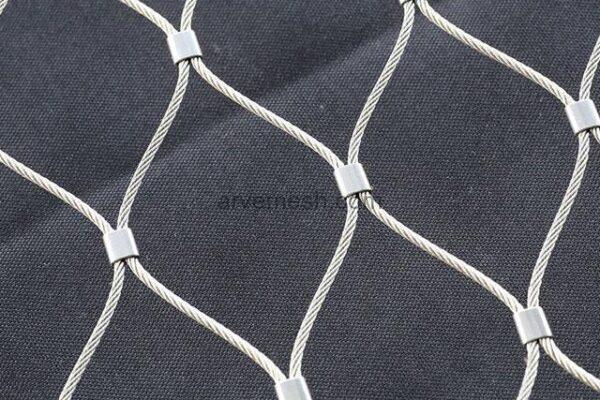
Chain link fence panels are a practical and cost-effective solution for securing residential, commercial, industrial, and agricultural properties. Manufactured from interwoven steel wire, chain link fencing provides reliable perimeter protection while maintaining visibility and airflow.
ArveMesh supplies chain link fence panels in customized sizes, wire diameters, mesh openings, and surface finishes to meet different project requirements. Whether you need fencing for a warehouse, construction site, school, sports facility, farm, or commercial property, we can help you select a suitable chain link fence panel configuration for your application.
Contact our team to discuss your project specifications and request a customized quotation.
What Are Chain Link Fence Panels?
Chain link fence panels are fencing sections made from galvanized or coated steel wire woven into a diamond-shaped mesh pattern. They are commonly installed with fence posts, tension bars, rails, and other accessories to create a complete perimeter fencing system.
Compared with some solid fencing options, chain link panels offer several advantages:
- Cost-effective security: A practical option for covering large perimeter areas.
- Good visibility: The open mesh design allows people to see through the fence.
- Airflow: The mesh structure permits air to pass through.
- Flexible installation: Suitable for different site layouts and ground conditions with appropriate posts and fittings.
- Customizable specifications: Panel dimensions, wire diameters, mesh openings, and finishes can be selected according to project needs.
- Versatile applications: Suitable for residential boundaries, industrial facilities, commercial properties, farms, and recreational areas.
The appropriate configuration depends on the required security level, environmental conditions, installation method, and project budget.
Chain Link Fence Panel Specifications
ArveMesh can discuss customized chain link fence panel specifications according to your drawings, project requirements, or preferred standards.
| Specification | Available Options |
|---|---|
| Material | Low carbon steel wire |
| Mesh Pattern | Diamond-shaped woven mesh |
| Mesh Opening | Common options include 50 × 50 mm; other sizes available on request |
| Wire Diameter | Customized according to strength and security requirements |
| Panel Height | Made to order according to project requirements |
| Panel Width | Customized to suit installation layouts |
| Surface Finish | Hot-dip galvanized, PVC-coated, or other agreed finishes |
| Color | Galvanized metallic finish or available PVC coating colors |
| Accessories | Posts, rails, tension bars, clamps, ties, and fittings as required |
| Application | Residential, commercial, industrial, agricultural, and recreational fencing |
Actual availability depends on the selected product design and manufacturing requirements. Please confirm dimensions, coating specifications, tolerances, and applicable standards before placing an order.
Types of Chain Link Fence Panels
Galvanized Chain Link Fence Panels
Galvanized chain link fence panels feature a zinc coating that helps protect the steel wire against corrosion. They are widely used for industrial boundaries, warehouses, construction sites, agricultural properties, and general-purpose perimeter fencing.
Hot-dip galvanized finishes can be considered for outdoor applications where corrosion resistance is important. The suitable coating specification depends on the intended service environment.
PVC-Coated Chain Link Fence Panels
PVC-coated chain link fence panels combine a protective coating with a colored finish. They are commonly selected for residential gardens, parks, schools, sports facilities, and commercial properties where appearance is also a consideration.
Available colors and coating thicknesses should be confirmed when requesting a quotation.
Heavy-Duty Chain Link Fence Panels
Heavy-duty chain link fencing can be configured with thicker wire, suitable mesh openings, stronger posts, and appropriate supporting components. It is often used for industrial sites, storage yards, logistics facilities, and other locations requiring a more robust perimeter barrier.
The overall performance depends on the complete fence system, including posts, connections, foundations, and installation quality.
Custom Chain Link Fence Panels
Custom chain link fence panels are suitable for projects with specific dimensions, unusual layouts, or particular installation requirements. Buyers can provide technical drawings, a bill of quantities, sample specifications, or site measurements to help establish the required configuration.
ArveMesh can review your requirements and discuss a suitable manufacturing solution.
Applications of Chain Link Fence Panels
Industrial and Commercial Facilities
Chain link fencing is widely used around factories, warehouses, distribution centers, equipment yards, and commercial properties. It helps define site boundaries while maintaining visibility for routine inspection.
Residential Gardens and Property Boundaries
Homeowners and contractors use chain link fence panels to enclose gardens, yards, and property boundaries. PVC-coated options may be preferred when a colored finish is required.
Farms and Agricultural Properties
Chain link fencing can be used to define agricultural boundaries and enclose selected areas. Fence height, mesh size, wire strength, and installation details should be selected according to the animals and conditions involved.
Sports Facilities and Schools
Chain link fence panels are commonly installed around tennis courts, playgrounds, school grounds, and recreational facilities. Appropriate height and mesh configurations can help separate activity areas while preserving visibility.
Construction Sites and Storage Yards
Contractors can use chain link fencing to establish temporary or permanent site boundaries. For temporary projects, the panel configuration and support system should be selected to suit the required installation period and site conditions.
How to Choose the Right Chain Link Fence Panel
Selecting the right chain link fence panel starts with understanding your project’s requirements.
1. Determine the required fence height.
Consider the intended application, site layout, local regulations, and required level of separation or security.
2. Select the mesh opening.
Smaller openings may be appropriate where limiting access through the mesh is important. The final selection should account for the intended use and applicable requirements.
3. Choose the wire diameter.
Wire diameter affects material consumption, weight, and the mechanical characteristics of the mesh. Select it together with the mesh opening and overall fence design.
4. Choose the surface finish.
Galvanized wire is a common option for general outdoor use. PVC-coated finishes may be preferred for additional coating protection and a particular appearance. Specify the coating requirements for the intended environment.
5. Confirm the supporting components.
Posts, rails, tension bars, fittings, foundations, and corner arrangements affect the stability and installation of the completed fence.
6. Check project quantities and delivery requirements.
Provide the required fence length, height, panel or roll configuration, delivery destination, and target delivery date to support accurate quotation and planning.
Chain Link Fence Panels vs. Chain Link Fence Rolls
Chain link fence panels and chain link fence rolls are related products, but their supply formats and installation requirements may differ.
| Feature | Chain Link Fence Panels | Chain Link Fence Rolls |
|---|---|---|
| Supply Format | Predefined or fabricated sections, depending on the design | Continuous mesh supplied in rolls |
| Installation | Installed as individual sections or assembled components | Unrolled and tensioned along the fence line |
| Typical Uses | Projects requiring defined sections or modular layouts | Long perimeter runs and flexible site layouts |
| Transportation | Depends on panel dimensions and packaging | Depends on roll diameter, width, and weight |
| Customization | Panel dimensions and connection details | Roll height, length, wire diameter, and mesh opening |
Important: In some markets, the term “chain link fence panel” refers to a framed modular section, while in others it may describe a specified section of chain link mesh. Confirm whether your project requires framed panels, unframed mesh sections, or chain link rolls before ordering.
If you are enclosing a long boundary, chain link fence rolls may be suitable. If your design requires individual framed sections, specify the frame material, dimensions, and connection method.
Why Source Chain Link Fence Panels from ArveMesh?
When purchasing chain link fence panels for a commercial or industrial project, buyers need to consider more than the unit price. Consistent specifications, suitable surface finishes, packaging, and clear communication are also important.
ArveMesh works with buyers to review project requirements and discuss suitable fencing configurations.
- Customized specifications: Discuss mesh openings, wire diameters, dimensions, finishes, and accessories.
- Project-based quotations: Provide quantities, drawings, or a bill of quantities for a quotation based on your requirements.
- Multiple fencing solutions: Compare chain link fencing with other wire mesh and perimeter security products where appropriate.
- Export order coordination: Confirm packaging, shipping arrangements, and documentation requirements for the destination market.
- Technical communication: Clarify product configuration and installation-related requirements before order confirmation.
Manufacturing capabilities, certifications, lead times, minimum order quantities, and available export services should be confirmed with our team for your specific project.
Request a Quote for Chain Link Fence Panels
Looking for a chain link fence panel manufacturer for your next project?
Send ArveMesh the following information to help us prepare a quotation:
- Required fence height and total length
- Mesh opening and wire diameter
- Galvanized or PVC-coated finish
- Framed panels, mesh sections, or chain link rolls
- Required accessories and installation components
- Order quantity and delivery destination
- Technical drawings, photos, or project specifications, if available
Our team can review your requirements and discuss suitable options for your application.
Contact ArveMesh today to request a quotation for custom chain link fence panels.
Frequently Asked Questions
What is the standard size of a chain link fence panel?
There is no single standard size for every chain link fence panel. Dimensions depend on the product design, local market, installation method, and project specifications. Provide your required height and width when requesting a quotation.
Are chain link fence panels available in galvanized and PVC-coated finishes?
Yes, galvanized and PVC-coated chain link fencing are common product options. The appropriate finish depends on the required appearance, exposure conditions, maintenance expectations, and coating specification.
Can chain link fence panels be customized?
Yes. Depending on the selected product and manufacturing capabilities, dimensions, mesh openings, wire diameters, surface finishes, colors, and accessories can be customized. Confirm the available options with the supplier.
Are chain link fence panels suitable for industrial applications?
Chain link fencing is widely used around factories, warehouses, equipment yards, and commercial facilities. For higher-security applications, the complete fence design and supporting components should be evaluated against the project’s security requirements.
What information is needed for a chain link fence panel quotation?
Provide the dimensions, mesh opening, wire diameter, surface finish, quantity, accessory requirements, and delivery destination. Drawings or a bill of quantities can help the supplier prepare a more accurate quotation.
What is the difference between chain link fence panels and welded wire fence panels?
Chain link fencing is made from interwoven wire that forms a diamond-shaped mesh. Welded wire fencing is made by welding intersecting wires into a grid. The two products differ in construction, appearance, rigidity, and installation requirements.
How can I order custom chain link fence panels from ArveMesh?
Send your project specifications, estimated quantity, and delivery destination through the ArveMesh inquiry form. Our team can review the requirements and confirm product options, pricing, and lead time.